An attachments and priorities exercise
Prototype
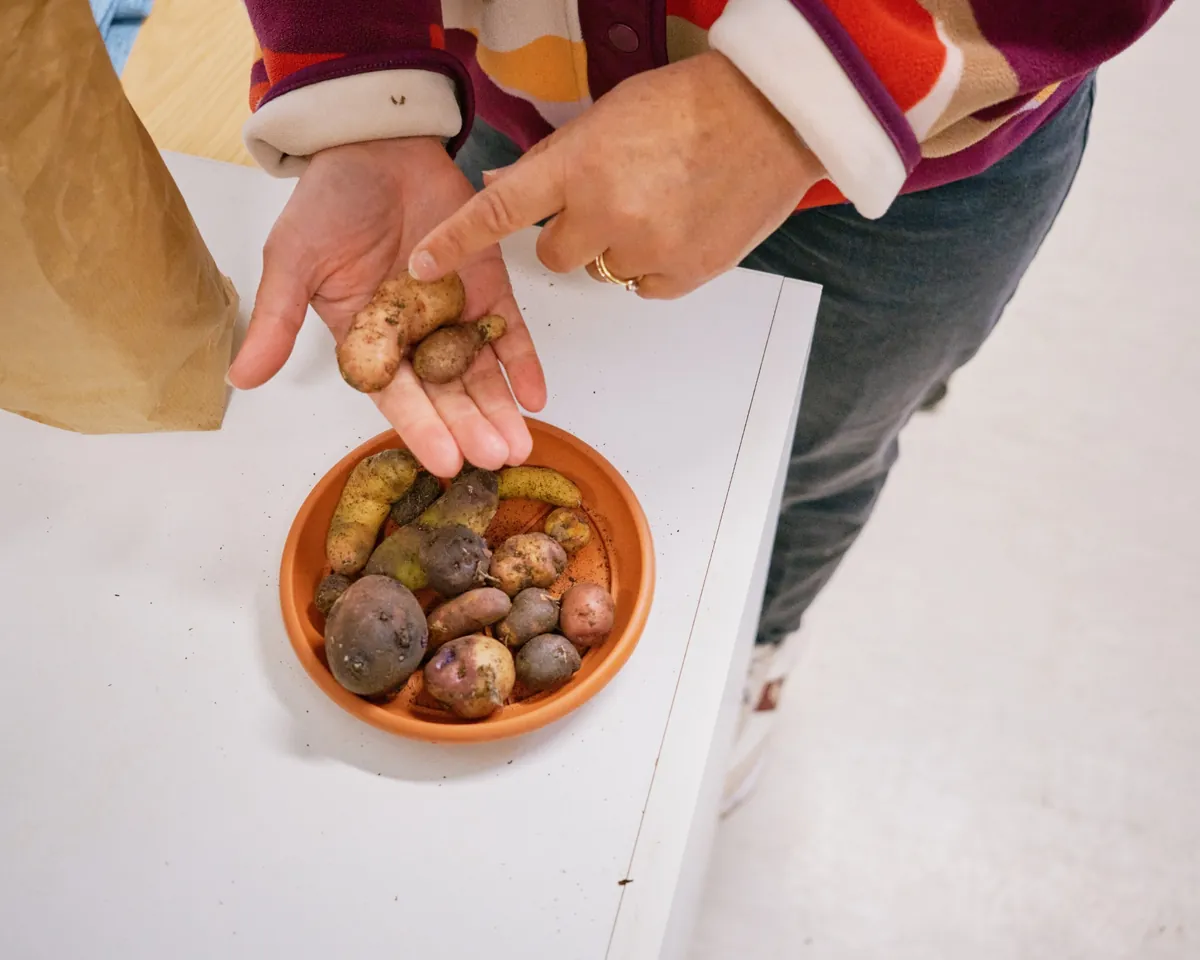
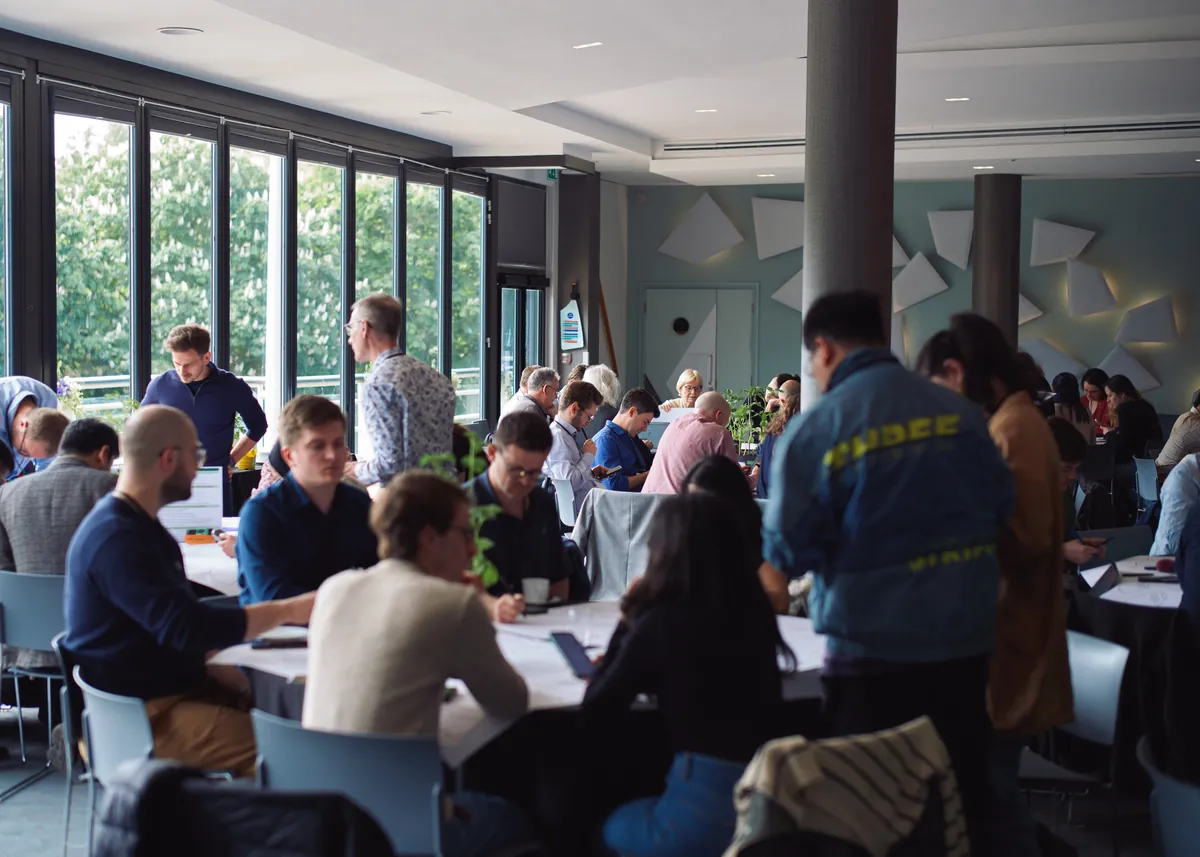
We designed and ran the first “ARIA Potato Day™”, a 90‑minute exercise that encourages groups to learn about the social attachments of today’s potato varieties, coupled with a participatory design session to imagine varieties of the future. Reflexive pauses were woven in, encouraging participants to consider how their synthetic biology practice might mesh with their personal values and priorities. We’ll be writing more about this soon, so check back or email us for more.
You can read about the backstory to this event below.
Rob
Robert Smith, University of Edinburgh
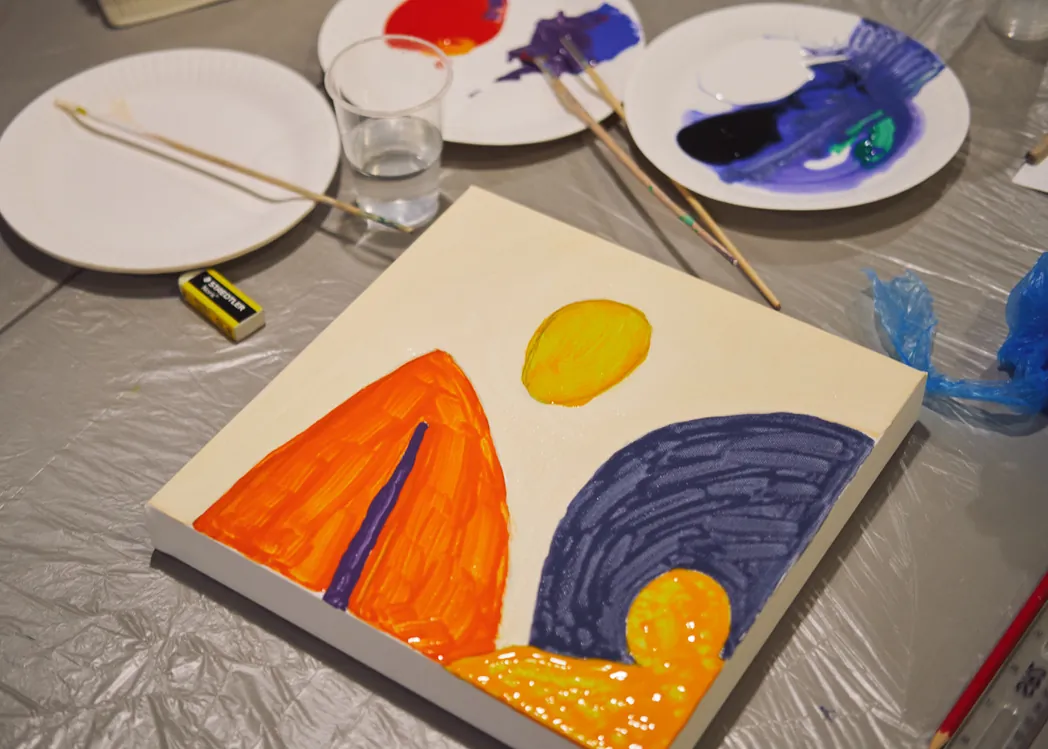
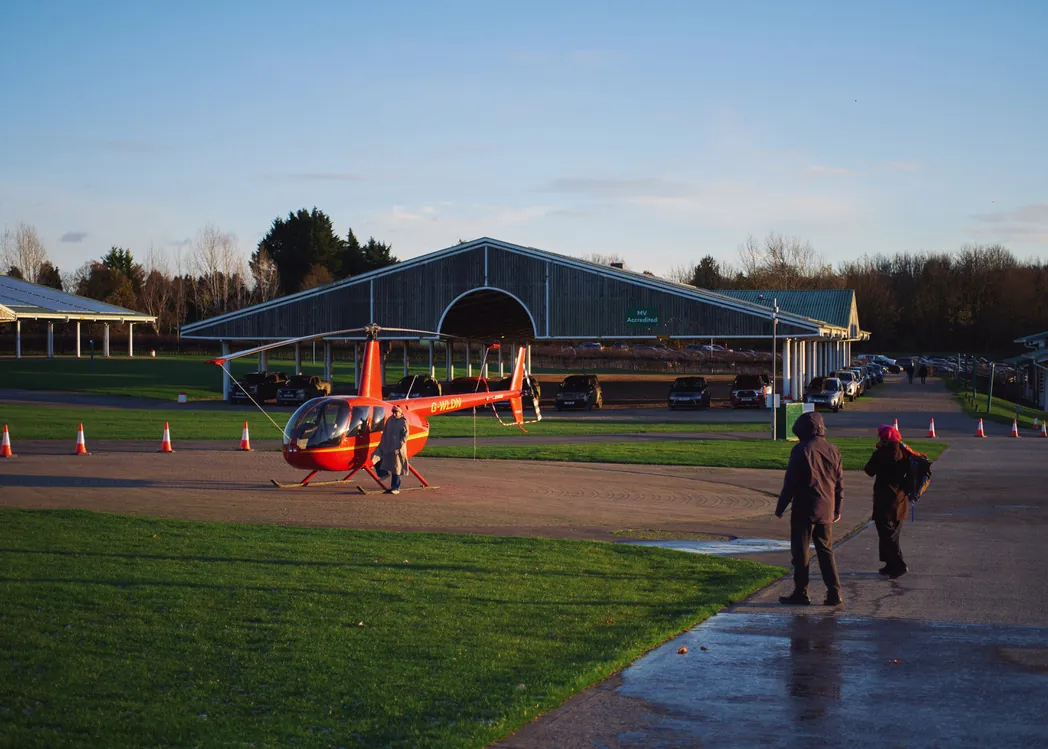
In a frumpy conference room near Harrogate elite researchers launch plastic potatoes through the air. We are given space to imagine photosynthetic snail racing and one-pot-mother-of-thousands-universal-tissue-culture systems. We do group painting and talk about our research in and on plant synthetic biology. Next door the NFU Potato Policy Working Group meets alone. From a darkening lawn, their concerned faces are illuminated by powerpoint. Across a field, down a track and past a helicopter, the British Potato Trade Show contains scores of real potatoes. Their canteen has the best ones I’ve tasted. Why did almost everyone in our programme walk round it? Twice.
For me, this puzzle is what animated our pilot experimental governance initiative. Our brilliant, charismatic and effusive programme director, Angie, is usually at pains to emphasise that ARIA’s scientific teams are working on improving the potato. And our own research on the programme has shown how the organism is doing its job — organising the science within the programme. Potatoes are charismatic and valuable, so they also anchor it to the world outside, making hopes of better crops seem more feasible than they otherwise might. Strengthening these attachments, by connecting science to user knowledge, is often a default goal for responsible innovation — but also just about any innovation that actually wants to solve a problem. So why, when given the perfect opportunity to meet people with knowledge of all-things-potatoes, did our programme largely decline? And what, if anything, can we do about it?
Our fieldwork with plant breeders, biological conservation curators and other experts has really hammered home how valuable their knowledge might be for a programme that wants to make radical changes to crop breeding. They have imagined new traits, evaluated the feasibility of existing dreams and emphasised the importance of having a compelling value proposition. They have also shown us the tensions that exist in this space — would that compelling value proposition mean farmers lose any agency to choose what they grow? In the months following our trip to Harrogate, we spitballed ways to try and bring this knowledge into contact with the programme once more.
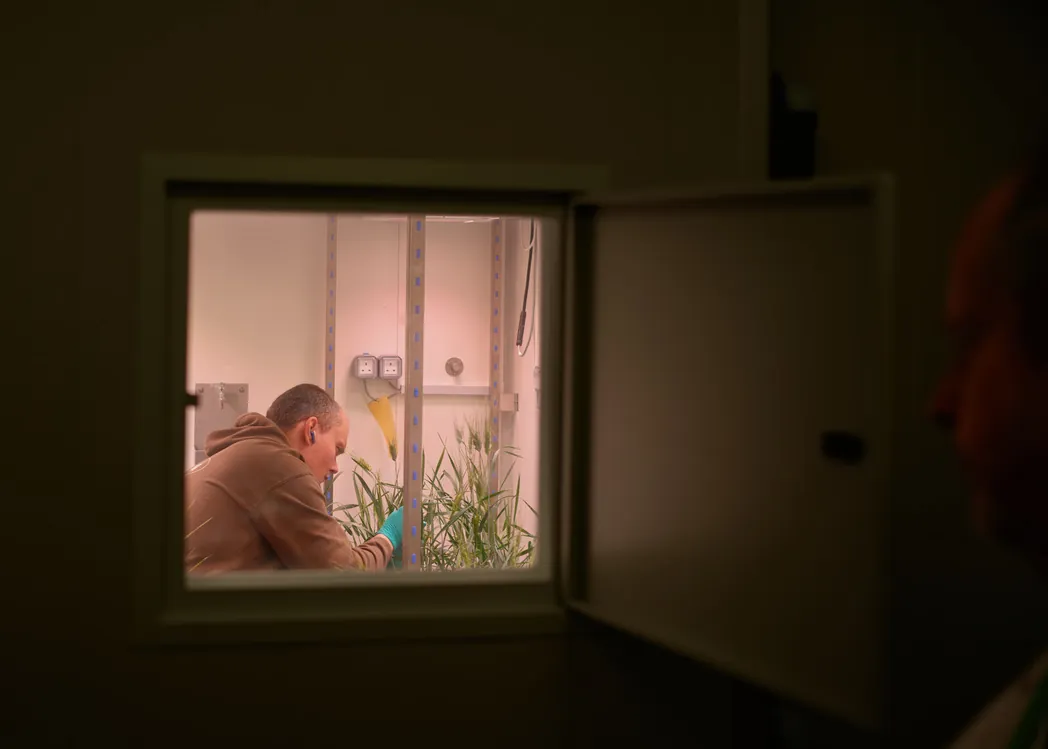
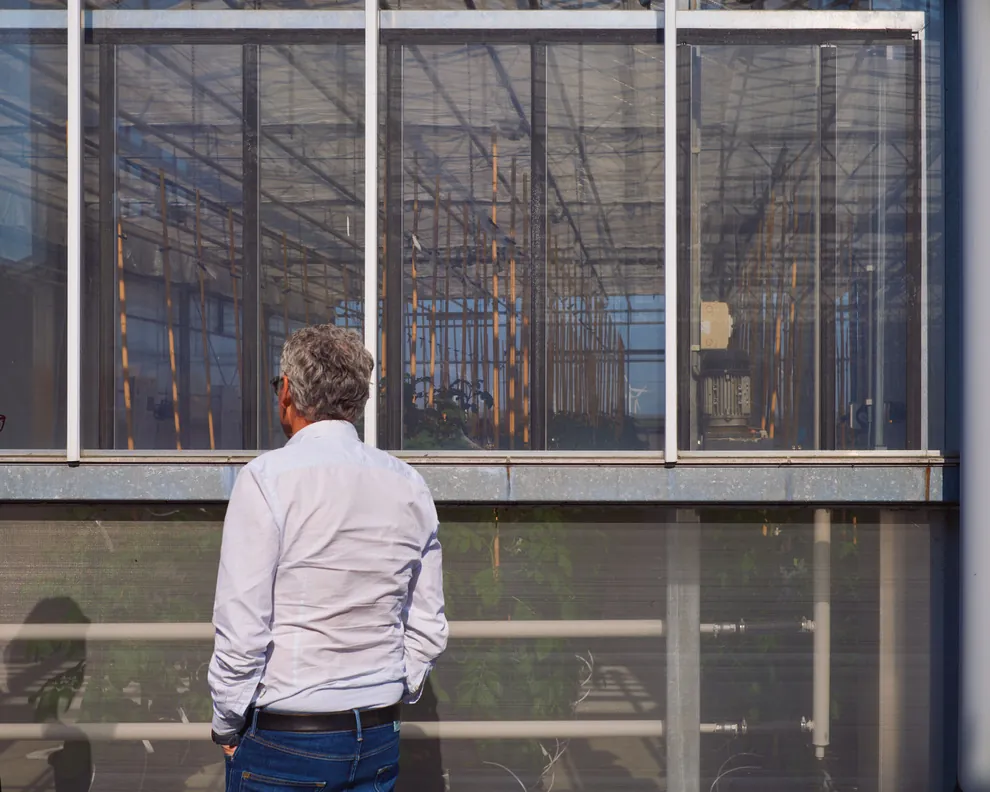
What emerged was a multidisciplinary workshop that assembled potato breeders, plant scientists from the programme, sensory artists, a film-maker and our research team to plot more. We wanted to use the workshop to show first-hand what some of our research looked like and why it might be useful — we did some spontaneous fieldwork, a group interview and shared documents to analyse. We also wanted to create a space where some of the more hesitant, ambivalent comments about the goals of the programme might be allowed to circulate. At the end of the workshop we discussed how to continue to work together, and in particular how to structure further contact between members of the Synthetic Plants Programme and those in the world of potatoes.
We landed on using varieties booklets — ‘found objects’ from our fieldwork that are ubiquitous within the potato world and, to us as STS researchers, very clearly show how design choices have been made throughout the breeding process. We thought we might be able to use them as a bridge between the worlds of synthetic biology, plant science and potato cultivation and consumption. Through discussion, we arrived at the idea of using a speculative potato ‘varieties booklet’ as a way of carrying contextual potato knowledge from the world of potato breeders into the programme, and also to prompt conversations about the kinds of values to embed into technology within the programme.
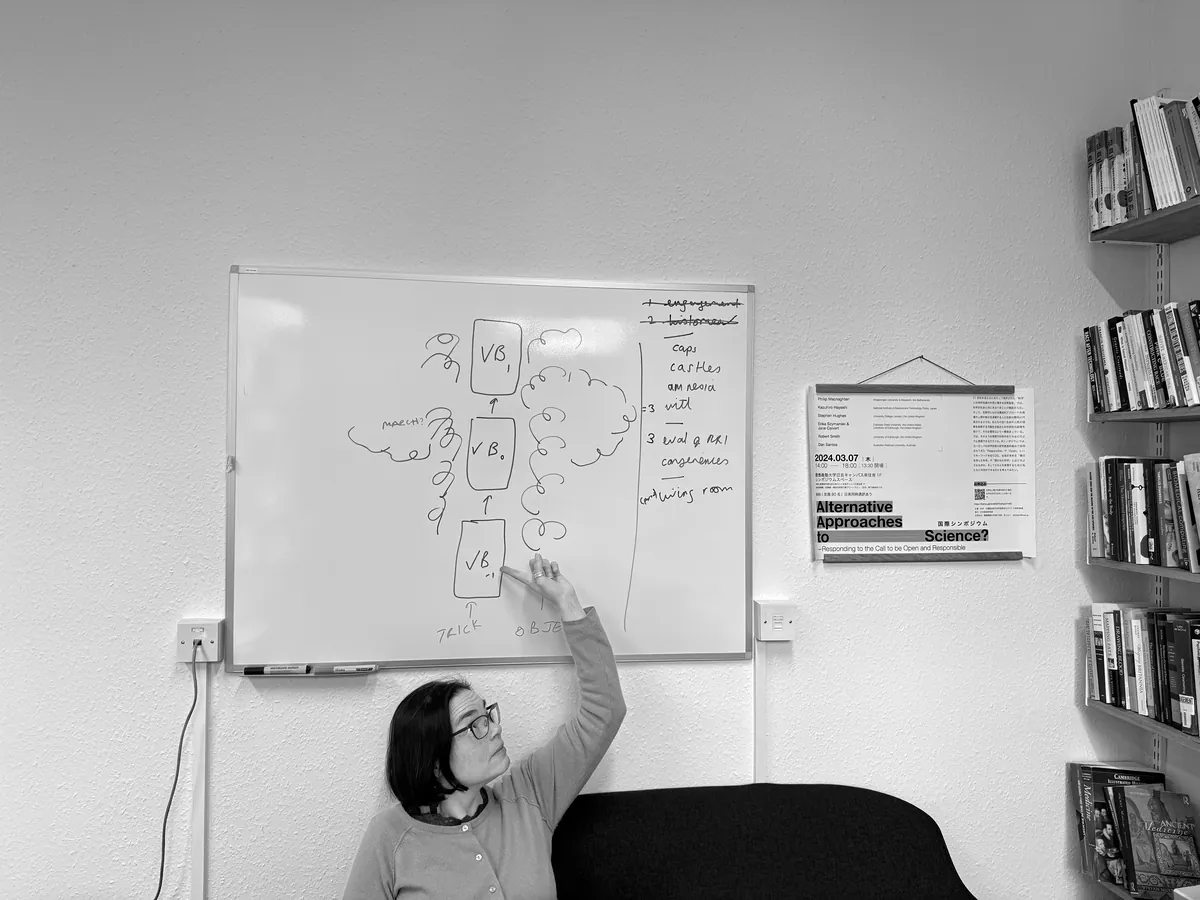
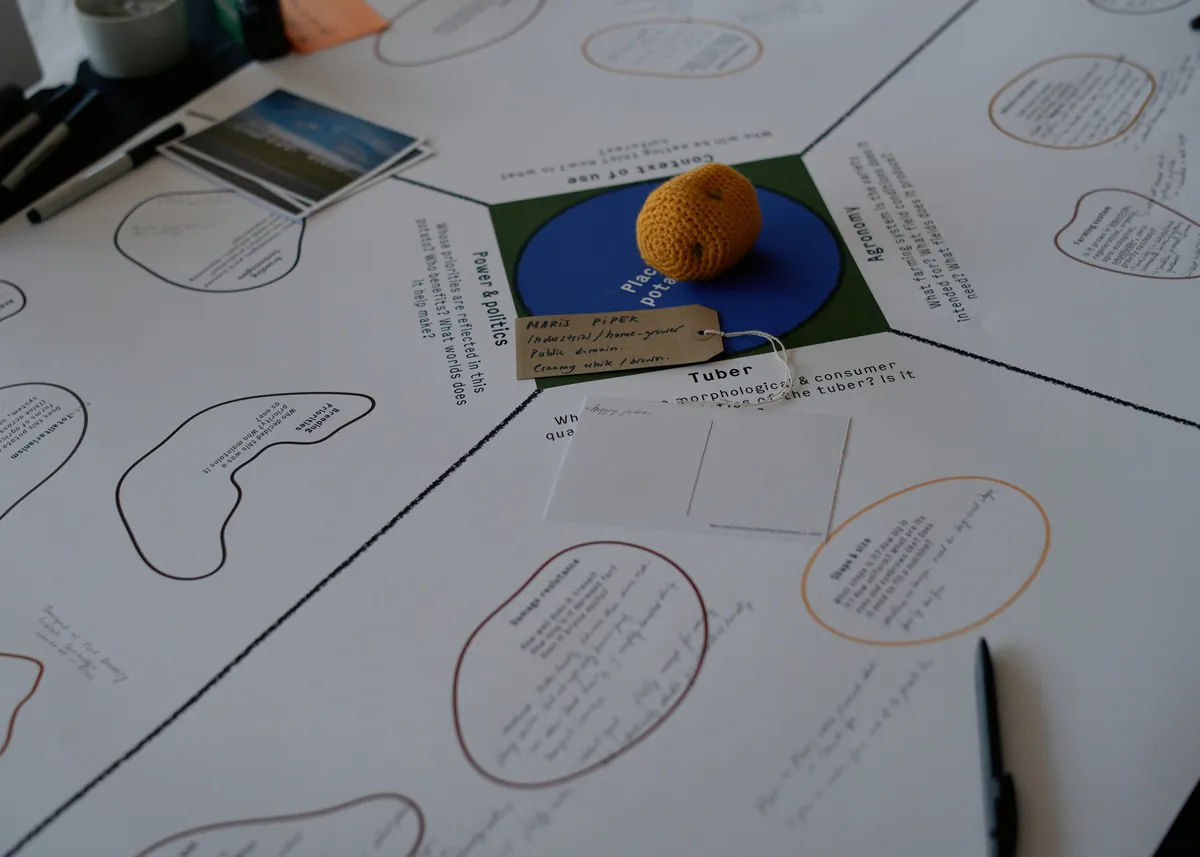
In the months that followed, Joana, Pallavi and I developed a workshop that would codify some of our fieldwork in two exercises. The first was inspired by Joe Dumit. We use Joe’s ‘Implosion Exercise’ a lot in our group. Essentially it’s a close tracing of all the potential attachments an object has in the world. You can do it with anything — a plastic cup through to a gene therapy — so why not with potatoes? We adapted the categories to include the wide range of concerns that people had raised with us. Some were deliberately provocative: a totalitarian index, for instance, that asked for the extent to which the potato excluded other forms of agriculture. Others were mundane ones, ubiquitous in commercial varieties catalogues like early/main/late crop. We paired this tracing with a speculative design exercise that asked teams to use their new knowledge to generate a hypothetical ‘first variety’ from ARIA. And we ran this workshop with the whole Synthetic Plants Programme at the next creator gathering at Eton College’s private boating lake…with both real potato plants and crocheted stand-ins made by my mum.
What this initiative produced is still in motion and I’m not yet sure where it will settle. After a recent conference talk a senior colleague asked me what, if anything, is really different about this programme. To many watchers, it looks familiar — same old promises, going to the same big companies, with the same old technology wrapped up in a more extreme anti-democratic funding process. Inside, the programme is perhaps best characterised by excesses — of community, of time, of dreaming, of playfulness. The recurring phrase that pops up from the director is one of abundance, a not-unproblematic importation from North America.
I think we are beginning to learn of the possibilities of a social science that notices these excesses, their frictions and runs with them. Here’s one example: the pilot gave air to discussions and narratives that don’t normally fit in this kind of extremely enthusiastic and techno-optimistic research programme. Things that usually sit on the margins, whispered quietly at drinks receptions or on walks: people questioning the economic imperative of ARIA, calling bullshit on the goals written into their projects, writing dreams of open source biotechnology into designs, or expressing horror at a biotech company sitting on publicly valuable research for 20 years. To many, what will come from this programme is entirely foreseeable. But governance is about process and outcomes. And by noticing frictions then playfully amplifying them, I think we are seeing that experimental governance initiatives might create more agency in the process than there might at first seem.
Joana
University of Edinburgh
Coming soon.
Special Guest
Coming soon.